
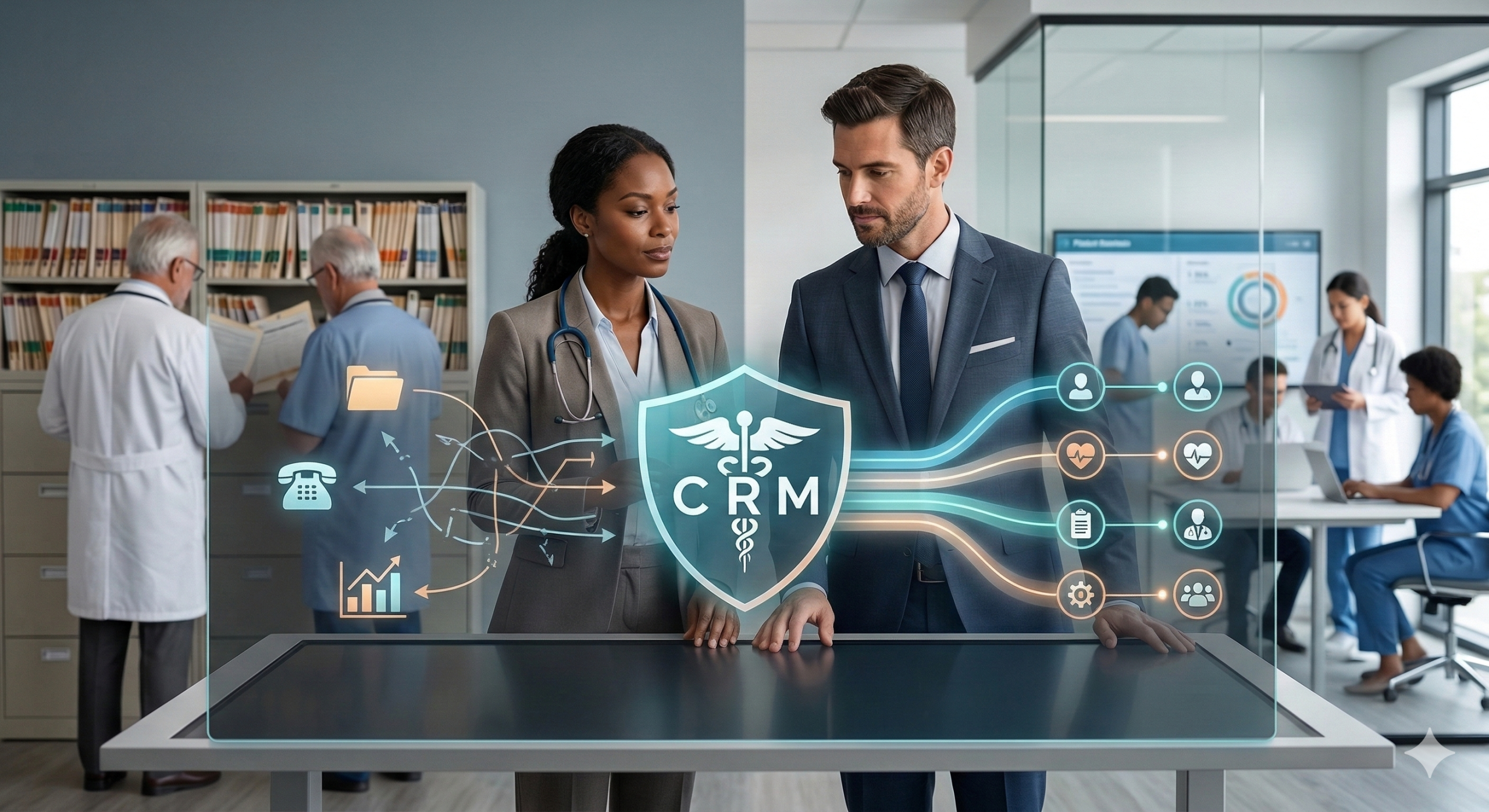
HubSpot vs Traditional Healthcare Systems: Why CRM Is Essential
Healthcare organizations rely on electronic health record (EHR) systems for clinical documentation, billing, and regulatory compliance. While these systems are essential for care delivery, they often fall short in supporting operational workflows, patient engagement, and marketing initiatives.
This gap has led organizations to implement CRM platforms like HubSpot as a complementary layer to manage relationships, communication, and operational processes outside of the EHR.
What EHR Systems Do Well
Electronic health record systems are designed primarily for clinical and administrative purposes. Key strengths include:
Clinical documentation: storing patient medical history, lab results, and treatment plans
Billing and insurance management: handling claims, authorizations, and payments
Compliance and security: supporting HIPAA and regulatory requirements
Clinical workflow management: tracking physician notes, prescriptions, and care plans
EHRs excel at managing patient care and operational compliance but were not designed for marketing, engagement, or lifecycle communication.
Where EHR Systems Fall Short Operationally
While EHRs are critical for clinical operations, they often lack the tools needed for:
Digital patient acquisition
Marketing automation and campaign management
Referral network management
Lifecycle communication and follow-up
Cross-team operational coordination outside clinical workflows
These gaps create inefficiencies in patient engagement, hinder marketing-driven growth, and make operational coordination more challenging for administrative teams.
Why Healthcare Organizations Implement CRM
Healthcare organizations are adding CRM platforms to address the operational gaps of EHRs. CRM platforms help organizations:
centralize patient communication across email, chat, and forms
automate patient onboarding, follow-ups, and reminders
track referral sources and partner networks
manage patient acquisition campaigns and lead-to-patient conversion
coordinate operational workflows across marketing, service, and administrative teams
By adopting CRM as a complement to EHR, organizations gain visibility into the non-clinical side of patient care, enabling more consistent engagement and operational efficiency.
HubSpot as the Engagement and Operations Layer
HubSpot provides CRM, marketing, and service tools that serve as the operational layer alongside EHR systems. HubSpot allows healthcare teams to manage patient relationships, automate engagement workflows, and coordinate operations across departments without disrupting clinical workflows.
Key HubSpot Capabilities for Healthcare
Patient engagement automation: appointment reminders, follow-ups, educational content
CRM-based patient journey tracking: monitor inquiries, referrals, and lifecycle stages
Operational workflows: assign tasks, manage requests, and synchronize team communication
Marketing automation: manage campaigns to drive awareness and patient acquisition
Data integration and reporting: analyze engagement metrics and campaign performance
By positioning HubSpot as the engagement and operations layer, healthcare organizations can bridge the gap between clinical systems and patient-centric workflows, improving both patient experience and operational efficiency.
Conclusion
EHR systems remain indispensable for clinical care, but they were never designed to handle the full spectrum of patient engagement, marketing, or operational workflows. Healthcare organizations are increasingly implementing CRM platforms like HubSpot to complement EHRs, enabling automated communication, lifecycle engagement, and cross-team operational coordination.
Together, EHRs and CRM platforms provide a complete technology stack for patient-centered care, combining clinical precision with operational efficiency.
Ready to See How CRM Can Complement Your EHR?
Our team helps healthcare organizations implement and optimize HubSpot as the operational CRM layer alongside existing EHR systems.
Schedule a Strategy Session
We can help you:
Identify operational gaps in your current EHR workflows
Design automated patient engagement and onboarding workflows
Coordinate communication across marketing, service, and operations teams
Measure engagement and acquisition performance
👉 Book a meeting with our team to explore your HubSpot CRM strategy.