
How HubSpot’s New Agents Connect First Touch to Collected Cash With Clean Data | Ep 072
Eric Housh and Brandon Landes, Chief Delivery Officer at Fast Slow Motion, break down HubSpot’s Fall Spotlight. HubSpot is connecting context, agents, and workflows across marketing, sales, service, and revenue, and the results depend on the data underneath.
Brandon explains how Agent Hub, Breeze Assistant, Marketing Studio, Prospecting Agent, Deal Progression, Revenue Agent, and Customer Agent fit together from first touch to collected cash, why human approval matters early, and where to start this week.
It’s for HubSpot users planning how to put these tools to work.
Listen On


In This Episode, You’ll Learn:
- What HubSpot means by Growth Context and the three layers of business, team, and customer context behind it
- How Context Home’s completeness score shows where your data is too thin for AI to work well
- How Agent Hub, Agent Builder, and Breeze Assistant fit together and why the architecture matters
- How Breeze Assistant can hand work to multiple agents and return a plan for re-engaging stalled deals
- How Marketing Studio, Content Agent, and Nurture Agent form a loop from insight to campaign to outreach
- Why more campaigns only matter if they produce qualified pipeline
- What marketing and sales should agree on, like lifecycle stages and lead status definitions, before turning on Marketing Studio
- How Prospecting Agent, Deal Progression, and Revenue Agent connect first touch to collected cash
- Why Brandon recommends keeping agent actions at one-click approval until the agents have earned trust
- How Customer Agent’s two-way handoff puts a person on the hard part and AI on the routine follow-up
- Why cleaning up your data doesn’t have to be all or nothing, and how to choose a first workflow
- What to do this week: pick one workflow, name its owner, define good output, and decide where a human stays in the loop
Additional Resources
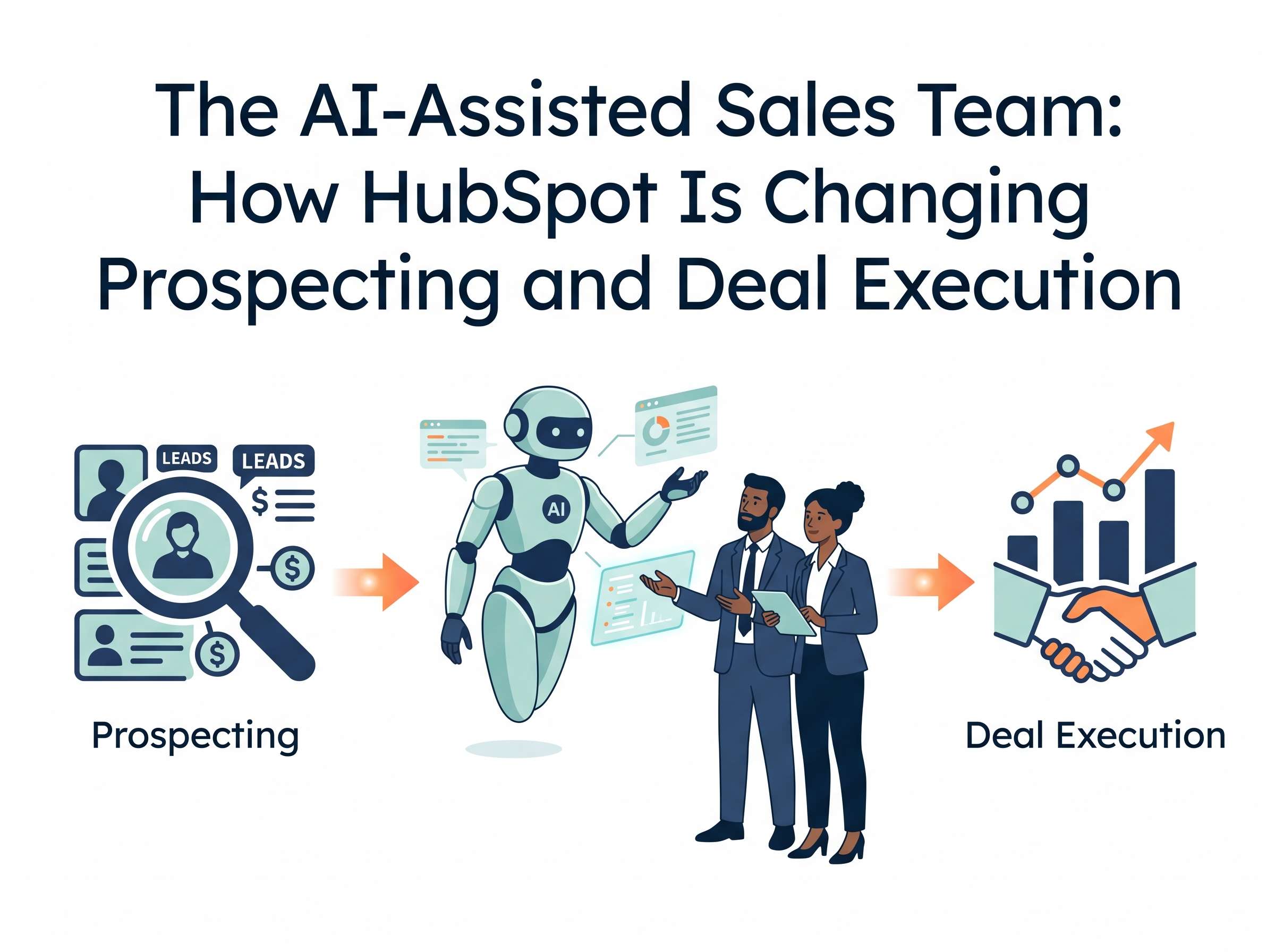
The AI-Assisted Sales Team: How HubSpot Is Changing Prospecting and Deal Execution

From Campaigns to AI-Powered Growth: What HubSpot UNBOUND 26 Changes for Marketing Teams

HubSpot UNBOUND 26: The Complete Guide to HubSpot’s New Agentic Customer Platform
About Fast Slow Motion
Fast Slow Motion is a team of expert consultants that have helped hundreds of growing businesses build scalable systems on the HubSpot and Salesforce platforms. Ready to take your business to the next level?
Let’s Talk →
"*" indicates required fields
Transcript
Eric Housh
Welcome to the Fast Slow Motion Podcast, where we discuss strategies, ideas, and insights about how to build a business you love while enjoying your life. I’m your host, Eric Housh, and today I’ve got one of our own in the chair, Chief Delivery Officer Brandon Landes, here at Fast Slow Motion. Brandon, HubSpot just wrapped Unbound, their annual event, formerly known as Inbound. And they dropped what they’re calling their most foundational product release in years.
There’s a lot to unpack. I wanted to bring you in as an expert who actually lives inside these implementations every day to help us, our audience, figure out what matters and what may be just noise. So we’re really glad to have you here, man.
Brandon Landes
Absolutely. Happy to be here, and there’s some exciting stuff that we’ll get to talk through in these releases over at Unbound.
Eric Housh
Well, you were watching everything come out of Unbound. I think a lot of us were. Before we get into the individual announcements, give me an honest 30-second take on what HubSpot was actually trying to say with this release, underneath all the product names.
Brandon Landes
Yeah, I think the biggest pitch around AI is it’s only as useful as the context that it has. So they were talking a lot about growth context, which is a combination of the business, team, and customer information that really grounds everything that the platform does. The self-updating smart CRM is kind of the foundation of that context, with calls, emails, meeting capture, having things synced automatically to reduce the manual logging to make sure you have that right context.
And then they introduced a thing called Context Home that gives users a completeness score of their data to get an understanding of where things are, then maybe where are the places that we don’t have enough information, and the context isn’t rich enough. So it can give us an idea as for how do we build upon the quality of our data. And then that data quality tied in with AI functionality is leading to deals closing faster. It’s leading to more MQLs.
It’s leading to a reduction of manual intervention in closed tickets. So that’s the claim, is that high-quality context is being leveraged with AI, and it’s getting some real business outcomes. So connecting the CRM context, the agents, the workflows, and doing that across all of the business functions with marketing, sales, service, and revenue starts to shift this into more of an agentic operating model on one platform with HubSpot.
Eric Housh
So I personally have heard that term, context, at least six dozen times over the past couple of weeks since Unbound. Stay there for just a minute, ’cause I think that’s a very important point for our audience. What does growth context actually look like in practice? And what is HubSpot pulling from to get that context?
Brandon Landes
Absolutely. Yeah. So think of it right now as three individual layers. You’ve got business context. That’s what your company does. What do you sell? What are your services? And how do you talk about your business? You’ve also got team context. That’s more about how you actually work. How is your sales team, your marketing team, your service teams, how are they working and progressing deals through stages? What are playbooks and different definitions of process? And then there’s the customer context, which is everything that you’re housing within your CRM, including the data that you’re capturing, but also the calls, emails, and additional context to layer it all together and have it captured automatically. And then AI can read across all three. So the output sounds like your business instead of some generic answer coming back from a different solution.
Eric Housh
And I know we’re gonna get to that later, but that foundational data that’s in the CRM, the cleanliness, the accuracy of that data, is super important for the reliability of some of these AI solutions. So, Brandon, underneath a lot of these announcements are Agent Hub, Agent Builder, and then the rebuilt Breeze Assistant kind of sits on top of them.
Walk me through, walk us through how those pieces fit together and why a business owner should care about the architecture and not just the individual agents.
Brandon Landes
Absolutely. Yeah. The Agent Hub and Agent Builder are both foundational feature products. They’re how a business builds and manages their agents and agentic workflows within HubSpot itself. The agents draw, like I just mentioned, on the same shared context, which is why that context foundation from the very beginning is so important. Breeze Assistant is kind of the first, it’s the front door, it takes direction. It assigns specialized agents to do the work based on its functionality.
Then it delivers back things like campaign plans, reports, proposals, but it’s all grounded in your CRM context. HubSpot describes Breeze Assistant without growth context as just another chatbot, which I think is a fair assessment. So really having some good, solid, grounded context, or growth context, is extremely important to power the AI. The Breeze umbrella, that brand is being retired for the individual agents. It is staying around as Breeze Assistant, again, kind of as that front door for admins. The big shift here with Agent Hub, Agent Builder, and then Context Home is that the role moves from managing workflows to really how do you get humans and AI agents to work together within the HubSpot portal? And those tools help you get a good view on that. An assistant can take action inside your CRM. And, you know, a lot of times people are using AI more as just recommendations,
and you’ve got different pieces of functionality with these agents, and you can open up the permissions as you get more comfortable with it. So there’s some different approaches to what you give the agent access to be able to actually do. So you want to work really hard at the beginning introducing these agents and really think through what the permissions and approval paths are that need to be in place before doing some broad rollout of these agents.
Eric Housh
Let’s stay on Breeze Assistant for a minute because I think it’ll help if we paint a little bit more of that picture for folks. Can you give me, like, a real example of Breeze Assistant maybe handing off work to an agent and then getting something in return?
Brandon Landes
Yeah, good example. So you’re talking to your Breeze Assistant, and you want to go through and build a plan for reengaging stalled deals. So you’re looking at last quarter, you ask it to do that, it hands that research off to the Prospecting Agent, it hands the content creation off to the Content Agent, and it comes back with a prioritized list of records or people and drafted outreach for approval that you can go through and tweak or just approve. So instead of going through and just getting a chat response to the question of you want to be able to run this campaign, you actually got a plan back that came from multiple agents, and it was orchestrated by the Breeze Assistant.
Eric Housh
Super cool. This wouldn’t be a HubSpot episode if we didn’t talk about marketing. Marketing Studio was one of the headline announcements at Unbound this year. HubSpot says early customers are creating up to 81% more campaigns with this tool. Help us understand how Marketing Studio, Content Agent, and Nurture Agent actually work together and whether more campaigns is the right thing to be excited about. That kinda struck me as odd.
Brandon Landes
Yeah, it’s a great question. So Marketing Studio is the connected campaign workspace. It surfaces AEO, which is, you know, tip of the spear at this point, with that answer engine optimization. It shows that visibility score, it shows underperforming segments, and it shows leads that come in and maybe just weren’t followed up with that are gonna become stale if you don’t take action. And then it lets you act on that directly. Content Agent in there supports the content creation that’s grounded in all of that business context that we were referring to earlier. So the output reflects the company itself and not just generic AI copy externally. The Nurture Agent brings that same context that it has from the business, because, again, they’re all shared on the same growth context. It just uses that toward a more personalized nurture for those leads to make sure that we’re doing the appropriate follow-up. Together they form a loop.
So the insights drive your campaigns, the campaigns drive the outreach, and then the results of that get fed into the next campaign. So it’s content and nurture working together. That 81% figure is interesting. That’s from early customers. And I think the question you alluded to is whether those campaigns actually produced a qualified pipeline, because we know that volume alone doesn’t quite answer that. And that’s where we’re seeing in some of the other numbers being reported with the use of good growth context and AI layered on top of it, we’re seeing an increase in MQLs, an increase in closed deals, and just a more efficient approach. There’s two more channels also that I want to make sure we don’t miss that were announced as integrations. ChatGPT Ads is now available, and that is, HubSpot has said it’s the first CRM to be able to provide that integration, and it lets you reach buyers that are researching in ChatGPT,
capture those leads, and get your attribution back similar to other channels. And then there’s Microsoft Advertising, which brings pipeline and revenue attribution into HubSpot, and that includes some verified LinkedIn audience work across Microsoft surfaces. The opportunity is that there’s a system now that learns from what worked, which is a different thing than producing more content faster. So closing that loop and learning, taking what you’ve learned and feeding it back into the campaigns at the beginning, closing that loop is what is really driving the gains moving forward.
Eric Housh
So as always, when we have a big new shiny thing like that, there’s a lot of excitement right around Marketing Studio, new marketing tools. What should a marketing team make sure they have in place before Marketing Studio’s worth turning on?
Brandon Landes
Yeah, this is where a lot of times there can be a gap, an unintentional gap, between marketing and sales. And really you need to start with a clear definition of the lifecycle, your client or customer lifecycle stages, and lead status definitions that are agreed upon by both sides, because the “leads that never got followed up with” view is only useful if both teams agree on the same thing, that it’s actually in the same status. So reasonable contact segmentation on your contact database also needs to be done.
So we can have an understanding of the different groups. And then we need a documented voice and positioning so that Content Agent can reflect whatever business context it finds. If that’s thin, the content is going to be too, and it’s not going to sound like it’s coming from your company if you haven’t set it up.
Eric Housh
On the revenue side, HubSpot’s positioning Prospecting Agent, Deal Progression, and Revenue Agent as one continuous, connected motion from first touch to cash collected. If you lead sales or revenue at a growing company, how should you be thinking about that whole path, and where would you start?
Brandon Landes
I would work through the lifecycle. Similar to what we were just saying, the Prospecting Agent is really that first touch. Deal Progression is advancing that deal. And then the Revenue Agent is used to go and collect cash after signature. So the Prospecting Agent monitors multiple, I think it’s up to 40, 40 or more, buying signals. It assembles a buying group to start to identify, you know, based on these signals, who do we think plays what role within this decision, if it’s a B2B scenario?
It can also draft personalized outreach based on that context, that growth context. And all of it can be triggered through Breeze Assistant. There’s also a mobile note taker that can take meeting transcripts, or, sorry, capture meetings in real time, whether that’s on a call or in a room, again, just feeding into additional context. Deal Progression takes those meeting transcripts. It surfaces CRM updates that should happen based on conversations. It can draft follow-ups, and it can keep deal plans current.
And it’s one-click approval. So a lot of this here is, let’s get suggestions, let’s get recommendations, then give our human input and go through and give approval to any of these updates instead of fully automating it. Revenue Hub can help by generating quotes automatically. It can use the full deal context to create it. And then there’s a Revenue Agent that picks up when signature happens, and it takes the signed quote and the deal context. It can generate an invoice, it can track payment, it can handle follow-up.
And all of that, you know, helps support actually receiving the cash on the back end of closing out that invoice. So the handoff between sales and finance doesn’t fall into a spreadsheet. It can be supported by that Revenue Agent. When you’re looking at these Deal Progression, again, a lot of this is about the quality of your process definition and the quality of your data. Deal Progression is going to be the most valuable when those pipeline stages are set, agreed upon.
Everybody’s working off the same business context and in the same process. And then your required fields already have clear definitions. So this is about enforcing data quality and enforcing standardization and process, because poor inputs are just gonna, you know, generate poor outputs when you’re leveraging AI. So the goal is to stay consistent. We want the context to be rich, and we want it to be consistent across the board. That’s gonna generate better AI output.
And that way the context doesn’t get lost between conversations, especially in that handoff between sales and/or marketing and sales, or sales and finance.
Eric Housh
How much of what we just discussed there is one-click approval versus a fully autonomous action?
Brandon Landes
I would keep all of it one-click at the beginning. Right now, most of it is going to stay one-click. Deal Progression surfaces the update and the draft, and then a person goes through and approves it. I think that’s the right default right now. You need to keep that human in the loop to make
Eric Housh
Yes.
Brandon Landes
sure that you’re monitoring the outputs of AI. And I’d keep it there until you’ve watched the agent make good recommendations consistently for a few weeks. And then you can start working on where are the lower-risk opportunities or items within this process,
where I can expose and have AI take more action on my behalf. So things like logging, a meeting summary, you know, anything customer- or client-facing, I would probably have human intervention there to be able to review it. But there might be some internal parts of that process that you could start to open it up a little bit.
Eric Housh
Definitely that crawl, walk, run approach that we espouse so often, and keeping that human in the loop until we can learn to trust the agents. ‘Cause the bottom line is, you know, a lot of companies out there may have some data cleanup work to do. They may have some fundamental things they’ve got to get right before these AI agents are able to be operationally contributing to the business. Service. Service is one of those, it’s like the redheaded stepchild. It gets overlooked by marketing and sales and these announcements, but Customer Agent got some pretty major upgrades. So walk us through where that product stands now, and how should a business decide on which conversations AI owns and which one a person owns?
Brandon Landes
Yeah, Customer Agent’s a major part of the fall spotlight. I’d say there’s updates across the setup for Customer Agent: targeting, handoff, knowledge, testing, coaching, segmentation, reporting, you name it, channels. They also started to include voice. There’s a lot of functionality there to help support the service organization. Audience segmentation lets a business now control a little bit more who an agent talks to. So you can limit that. Again, some of that could be used for specific VIP-type clients or in a certain client lifecycle stage, it also could be that you don’t want them to interact with an agent and you want more human intervention there. You can also use it to mitigate risks in a rollout, right? To, for a strategy of how to expose this in different ways. The handoff between AI and a human now works in both directions. So from AI to human and then human back to AI to close out tickets, which is nice. There’s also the ability for batch testing,
which checks how the agent performs before you get it to go live. And again, more of a risk management strategy there. Voice is on the way, and it extends the Customer Agent beyond just text-based channels, which will be nice, but there’s still more to come there. The real decision is, it’s a real business decision and conversation, but which conversation should AI own and which should stay with a person? And that’s a business call before it’s a configuration choice, but it is a conversation that we’re happy to help have.
And really it depends on what the function is, what the process is, what the output is, and also obviously what the business is.
Eric Housh
You mentioned something earlier about a two-way handoff between agents and humans. Why does that matter for the customer experience?
Brandon Landes
Yeah, the one-way handoff, how it’s been, is the moment a human gets involved, AI’s done. The person carries the whole conversation the rest of the way forward. It’s on them to go through and close anything out. The two-way means a human can step in to handle the hard part. So the handoff from AI that it couldn’t resolve, hand over to a human, jump in, handle the hard part, and then hand it back to AI for the routine follow-up. So the customer gets a person when it matters, but also gets fast answers when they need it.
And the team’s not stuck on tickets. So you can resolve the hard part now and hand it back to AI to continue and close that case or that ticket.
Eric Housh
Super cool. I’ve mentioned this a couple of times in this episode, Brandon. This is what I keep coming back to. All of these nice, shiny things, they sound great to marketers, to sellers, to service, revenue, but everything comes back to clean, structured data, clear ownership. How honest should a business owner be with themselves about whether they’re even ready for any of this?
Brandon Landes
Yeah, I think you’ve gotta take a good look in the mirror and be very honest with yourself on an assessment of where your data quality is at, and look at what the steps are that you need to take, not only to fix the current data, but ensure that it’s clean moving forward with good process and validation. So the real story underneath all these AI announcements is that a lot of them won’t function the way intended if the CRM data underneath them is a mess. Right? The data, the context has to be clean, the context has to be rich.
So we’ve got some methods to be able to look at it. Are we thin in context in certain places that we discussed earlier? There’s also just, is AI operating off of data that is going to lead to poor outputs? So I talked about the buyer intent, for example. You can look at all these, you know, buying signal types, custom intent signals, churn risk, deflection, you know, you’ve got Data Agent in there, Context Home, a lot of these new tools. But you really have to make sure it’s grounded in clean data and process.
So, you know, that Context Home can give a completeness score. That’s where I was talking about where can we identify where our data or context is thin. But that score can’t decide if, you know, the team’s definition of a lead is authoritative. It can’t decide if the marketing and sales are operating off of a different understanding of the stages or customer lifecycle stages. So you need to have some of that put in place first before you can layer and truly get
the most out of these new AI tools.
Eric Housh
Is, Brandon, is there a version of this that still works if the CRM isn’t fully clean, or is this kind of an all-or-nothing thing?
Brandon Landes
Yeah, it’s not all or nothing. I would start with a workflow where your data is already clean. It’s decent. You can be, you know, doing something like a meeting capture or service. You can turn on AI somewhere where it’s a little less risky while identifying where you really need to do your cleanup. ‘Cause it’s typically not all or nothing that all of your data is dirty. It typically is in certain teams or certain spots where, you know, there’s an opportunity to improve the way the CRM is built or, you know, the way we’re intaking data in that process.
But it’s definitely the companies that are gonna get the most out of the fall spotlight are gonna be the ones with clean data and good governance within their CRM. Some others are gonna have to start in areas to clean up that data first or get some good governance in place, and then they’ll get the benefits of some of these new AI capabilities. But I would say what you don’t wanna do is just go turn on everything at once.
Eric Housh
Right.
Brandon Landes
You know, the agent will confidently act on bad data. That’s that part
Eric Housh
Yes.
Brandon Landes
with that completeness score. Like, that’s the context that we have to bring to the conversation. But you’ll end up updating more than what you saved by just going and turning things on. You want to have a good plan so that you’re getting the most out of your AI.
Eric Housh
Let’s stay on the plan here for a minute, because I imagine somebody’s listening to this, they’re on HubSpot, they want to take advantage of some of these new products, these features, these AI agents. They wanna be addressing their business now for not only the present but the future. All their competitors are going to jump on this bandwagon. So if somebody’s in that seat right now, feeling that way,
what’s one thing you tell them to do this week to start getting ready for what we’ve talked about today? And where can they go to get help from our team if they need it?
Brandon Landes
Yeah, absolutely. So I would start, just pick a workflow, pick a process, something simple like a meeting follow-up, lead routing, campaign planning, you know, name who actually owns that process or that workflow. And then let’s define what a good output looks like. What are we expecting to get back? And then we decide where the human stays in the loop. What part needs to be AI and what part needs to have human intervention? And that really differs depending on the process. And just work on that process and see where the opportunity is.
You know, the data and process foundation is the investment that is really worth making now, before you go turn on those AI capabilities, to ensure that you’re getting the most out of the functionality. But you can get started at any time identifying what’s the first process or the first business problem that I want to solve. And then identify the risks and steps that you need to take to be able to get there with clean data. And this is exactly what we do. So I know you brought me in
to help support, you know, we have a lot of conversations with clients every day around exactly this: data cleanliness, governance, CRM setup, how do you get the most out of your AI, and making sure that HubSpot’s set up in a way that it can take advantage of everything that the platform can do and everything that HubSpot continues to iterate on and put out in terms of new functionality. I believe there’s going to be a link that’s posted with this that’s gonna be sent out, and I would love for anybody to reach out that we can help have a conversation with.
Eric Housh
Brandon, thanks so much for breaking this down. There’s a lot in this release, and you’ve really given us a practical way to think about it. For our audience out there listening, all these resources and links that we’ve mentioned today are going to be in the episode description in the show notes. So check that out. If you want to reach us, fastslowmotion.com, there’s a Contact Us page, easiest way to get in touch. We’ll hook you up with Brandon and his team to help you start navigating these things. The best time
to have these conversations was a few years ago. The second best time is right now. So thank you all for tuning in, and we’ll see you next time on the Fast Slow Motion Podcast.