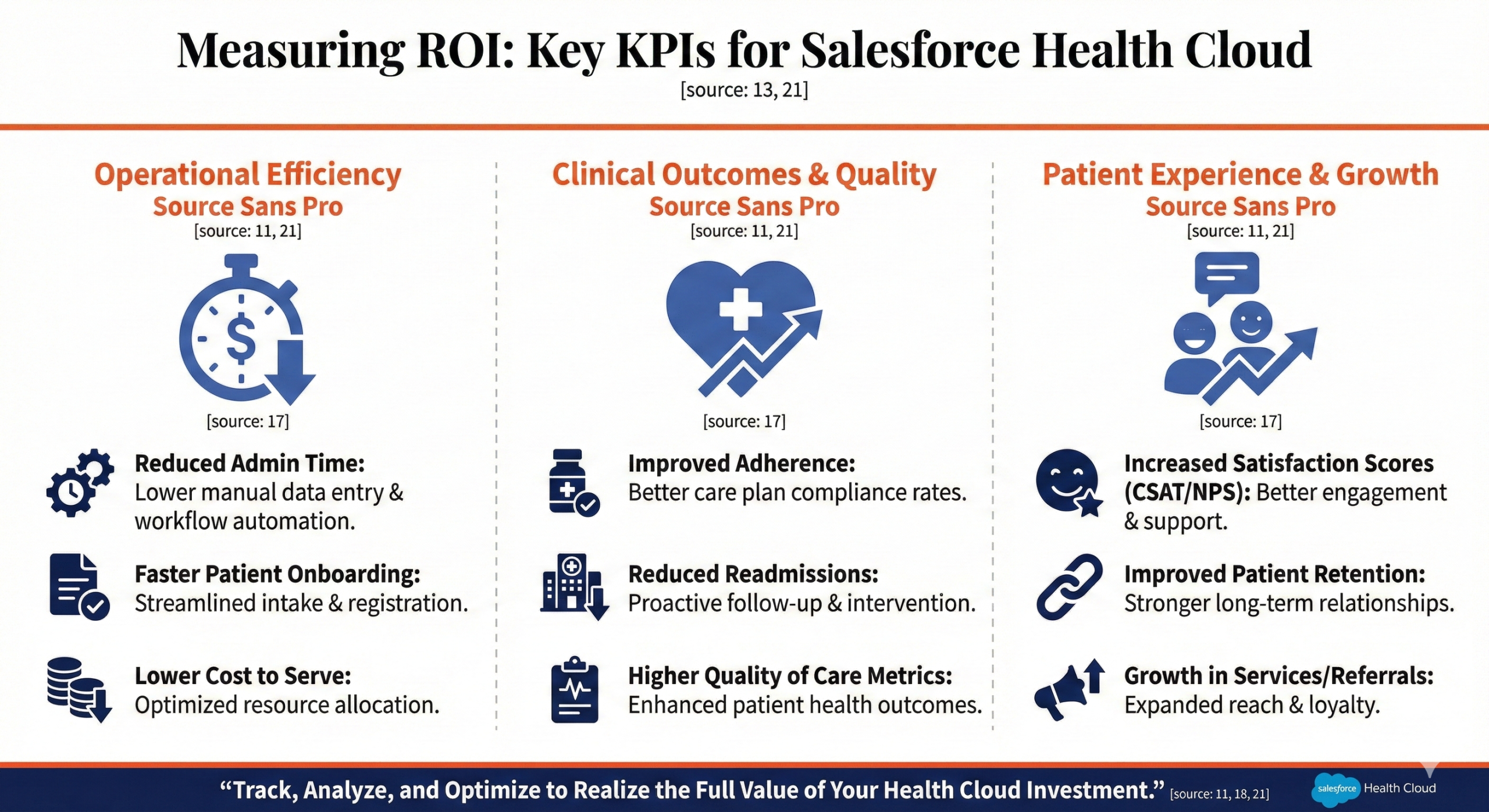
Learn how to measure ROI from Salesforce Health Cloud using access, outcomes, utilization, engagement, and cost-to-serve KPIs.
Read More
Unify fragmented systems. Modernize engagement. Scale with confidence.
Fast Slow Motion helps healthcare and life sciences organizations implement Salesforce as a connected operating platform to support commercialization, field teams, and coordinated stakeholder engagement.
The Challenge
Fragmented Systems Limit Commercial Clarity
Healthcare and life sciences organizations must scale commercialization while navigating complex relationships, acquisitions, and evolving engagement models.
Medical device companies manage multi-stakeholder buying cycles. PE-backed providers inherit disconnected systems through growth. Digital health and life sciences teams must scale without losing visibility.
But commercial infrastructure often lags behind growth.
Common challenges we see:
CRM, ERP, clinical, and engagement systems that don’t align
Limited visibility into provider, partner, and patient relationships
Inconsistent engagement across field teams
Manual workflows slowing commercialization
Disconnected environments after acquisition
Difficulty scaling while maintaining governance
Without a unified foundation, growth introduces complexity instead of clarity.

The Solution
A Smarter Salesforce Platform for Healthcare & Life Sciences
Fast Slow Motion helps healthcare and life sciences organizations design, implement, and optimize Salesforce, including Health Cloud, to support both commercial operations and coordinated engagement across providers, partners, and patients.
With Salesforce, we help you:
Modernize commercial operations
Enable field teams with actionable insights
Connect provider, partner, and patient relationships
Streamline engagement across the lifecycle
Integrate systems after acquisition
Support AI-ready engagement
Using Salesforce Health Cloud and core platform capabilities, organizations can unify clinical, commercial, and engagement data to improve visibility and coordination across the ecosystem.
Whether you’re modernizing commercial operations, improving field engagement, or navigating post-acquisition integration, Fast Slow Motion can help you think through what’s possible.
Structuring Healthcare Engagement with Governance in Mind
Healthcare and life sciences organizations often need to manage engagement across providers, partners, and patients — without introducing unnecessary risk.
Salesforce, including Health Cloud, provides flexible data models and role-based access that allow organizations to structure how engagement data is stored, shared, and used.
Fast Slow Motion helps healthcare and life sciences organizations:
Design governance-aware data models
Implement role-based access and visibility
Structure engagement across stakeholders
Separate commercial and patient-facing workflows
This allows organizations to unify engagement across their ecosystem while maintaining appropriate controls.

Use Cases
Navigating Complex Relationship Ecosystems
Healthcare organizations rarely engage with a single stakeholder.
Salesforce helps you:
- Manage relationships across providers, systems, partners, and patients
- Track engagement across long, multi-party journeys
- Maintain visibility across distributors and care networks
- Coordinate engagement across internal teams
Scaling After Growth or Acquisition
Many healthcare organizations grow through acquisition, inheriting fragmented systems along the way.
Salesforce supports:
- Standardizing engagement across acquired entities
- Consolidating legacy CRM and sales tools
- Maintaining visibility during transition
- Creating consistency without slowing growth
Supporting Modern Engagement Models
Healthcare engagement is no longer linear.
Salesforce helps you:
- Align sales, partnerships, and support teams
- Structure outreach across multiple stakeholders
- Improve coordination across territories
- Support both recurring and capital-based revenue models
Improving Visibility Without Increasing Complexity
Growth often reduces clarity.
Salesforce helps organizations:
- Gain insight into pipeline and relationships
- Improve collaboration across teams
- Reduce reliance on manual tracking
- Support more informed decision-making
Healthcare Resources
Insights and resources to help healthcare organizations scale marketing, sales, and lifecycle engagement.

Salesforce Health Cloud Implementation: Timeline, Pitfalls, and Partner Considerations
Planning a Salesforce Health Cloud implementation? Learn realistic timelines, integration challenges, data migration risks, and when to use an implementation...
Read More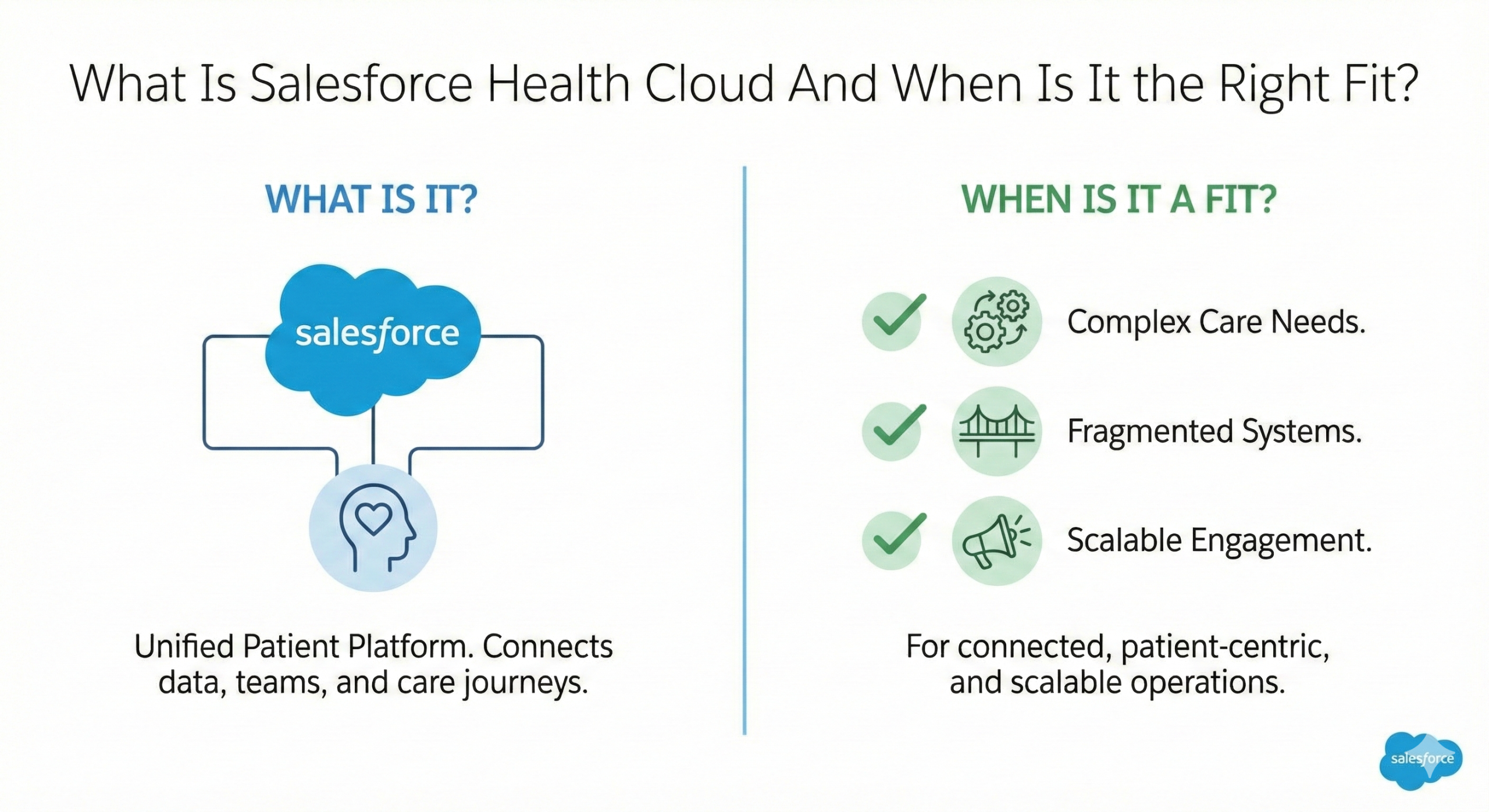
What Is Salesforce Health Cloud And When Is It the Right Fit?
Learn what Salesforce Health Cloud is, who it’s best for, when Sales or Service Cloud may be enough, and how...
Read MoreWhat Our Clients Say
“Fast Slow Motion was a great partner. Their team worked with us through several decisions, helped us to customize where we needed to, and led us to follow best practices whenever possible for our business case. The team is very knowledgeable, communicates well, and really led us to a successful implementation.”
Lauren Dews
Pack Health
Why Healthcare & Life Sciences Organizations Choose FSM
Deep experience supporting complex healthcare engagement models
Proven Salesforce implementations across medical device, provider, and life sciences organizations
Expertise integrating CRM with legacy and acquired systems
Experience supporting commercialization and field engagement workflows
Governance-aware architecture for sensitive data environments
Scalable system design aligned to growth and acquisition
U.S.-based consulting team with over a decade of implementation experience







FAQ
Can Salesforce support healthcare-specific engagement models?
Yes. Salesforce, including Health Cloud, supports complex relationship structures across providers, partners, and patients, enabling coordinated engagement across the healthcare ecosystem.
Is Salesforce suitable for medical device companies?
Yes. Salesforce is widely used to manage complex sales cycles, field engagement, and commercialization workflows.
How does Salesforce support post-acquisition integration?
Salesforce can serve as a unified platform to standardize engagement and maintain visibility across acquired entities.
What about compliance?
Salesforce — including Health Cloud — provides flexible data models, role-based access controls, and visibility settings that help healthcare organizations structure engagement across providers, partners, and patients while maintaining appropriate governance.
